
Every place has its own pulse a natural rhythm of movement, pauses, crowding, stillness, and silence. Sometimes, however, this rhythm is disrupted by something unusual: a suspicious action, an out-of-pattern movement, or an unusually long pause.
In such moments, Human Behavior Analysis in AI-powered systems acts like an experienced and attentive nurse continuously monitoring this pulse, detecting any irregularities before they turn into serious incidents.
In this article, we will explore AI in Video Surveillance and its key applications in modern security systems.
Architecture of an AI-Based Human Behavior Analysis System
In simple terms, the architecture of an AI-based Human Behavior Analysis system follows a fast, multi-stage pipeline.
First, video frames are captured through surveillance cameras. Then, motion detection algorithms identify any movement within the scene. After that, artificial intelligence models analyze these movements by comparing them with previously learned behavioral patterns.
If any abnormal behavior is detected such as unusual motion, aggression, or suspicious activity the system immediately flags it and generates an alert. This allows security personnel to respond quickly and appropriately in real time.
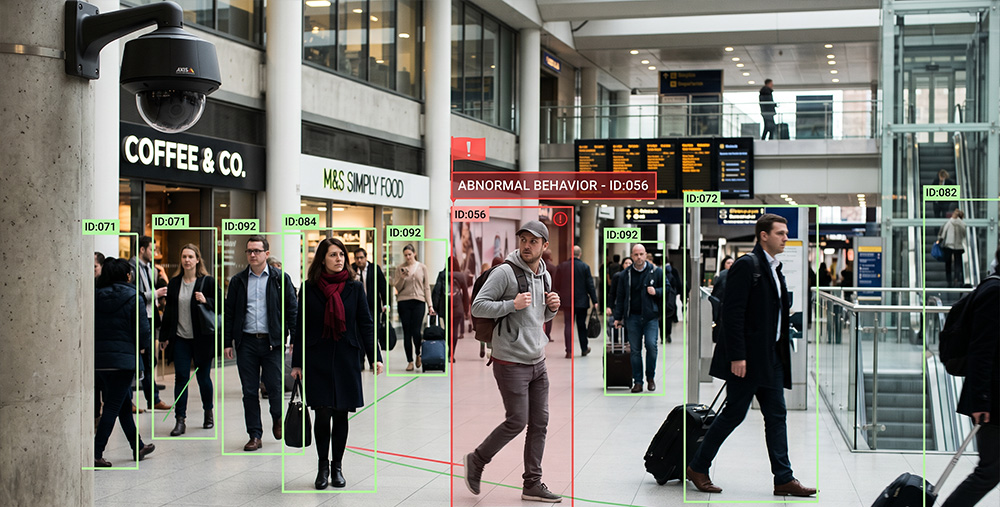
This process is typically powered by Deep Learning for Behavior Analysis, enabling more accurate interpretation of complex scenes in modern Video Surveillance Systems.
Key Applications of Human Behavior Analysis in Video Surveillance Systems
Now let’s move to the most interesting part: where is Human Behavior Analysis actually used in real-world scenarios?
Activity Recognition through Body Pose Analysis
AI-based systems can analyze human posture and body movement patterns. In hospitals, where patients may be weak or unconscious, this capability helps detect falls and ensures timely assistance.
It is also widely used in elderly care facilities for continuous monitoring of seniors, and in gyms to help correct exercise posture and improve training accuracy. This is a strong example of Activity Recognition in real environments.
Real-Time Abnormal Behavior Detection in Crowd Situations
In high-energy environments such as football stadiums or stressful places like police stations, conflicts can happen at any time.
AI systems can detect early signs of confrontation by analyzing rapid movements, aggressive gestures, and unusually close physical distance between individuals. This enables security teams to intervene before situations escalate into serious incidents. This is one of the most important use cases of Abnormal Behavior Detection in modern surveillance.
Suspicious Situation Detection
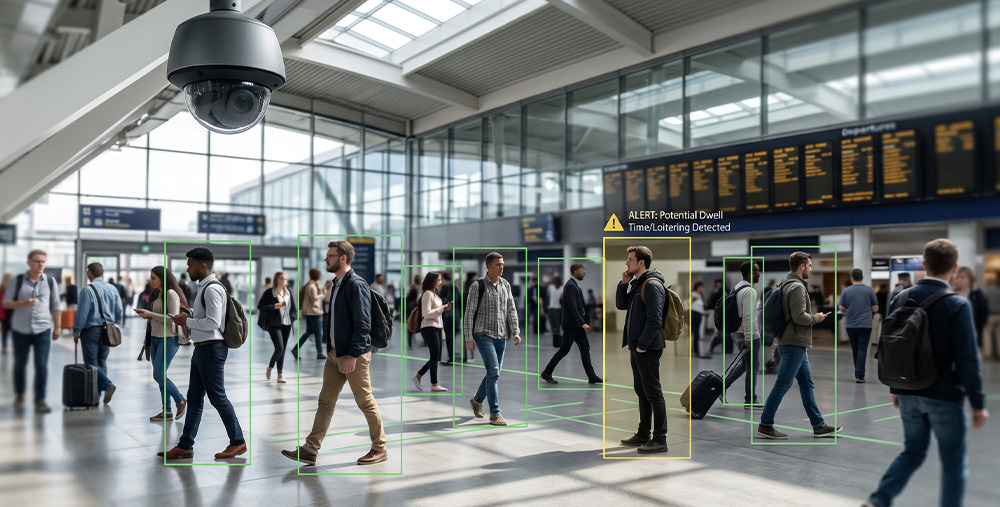
AI-powered systems can quickly identify unusual behaviors in sensitive environments such as banks or public institutions. For example, if a person behaves suspiciously near secure areas, the system can detect and flag it immediately. This allows preventive action before any incident occurs.
Crowd Management and Behavior Prediction
In crowded environments such as concerts, exhibitions, and shopping malls, AI-based systems analyze crowd movement patterns and can even predict potential congestion points. This helps managers optimize crowd flow and improve safety by preventing overcrowding situations before they occur.
ATM Tampering and Fraud Detection
ATM areas are highly sensitive locations. Video Surveillance Systems enhanced with AI can detect suspicious actions such as unusual waiting behavior, tampering attempts, or abnormal proximity to the machine. This helps prevent theft, vandalism, or fraud-related activities in real time.
Challenges and Limitations of Human Behavior Analysis in Video Surveillance Systems
Despite its powerful capabilities, Human Behavior Analysis is still far from perfect and faces several important challenges.
Reduced Accuracy in Real-World Conditions
In real environments, conditions are rarely ideal. Poor lighting, camera angle limitations, low resolution, and even weather conditions like rain or wind can significantly reduce system performance.
Inability to Understand Human Intent
AI systems do not understand true human intent they only analyze visible behavior patterns.This means that normal behavior can sometimes be incorrectly classified as suspicious, leading to false alarms. This remains a key limitation in Behavior Recognition systems.
Complexity of Human Behavior
Human behavior is naturally diverse and unpredictable. A movement that seems normal in one context may appear suspicious in another. This variability makes training AI models extremely difficult and requires large, high-quality datasets.
High Computational Requirements
Real-time video analysis, especially in high-resolution or multi-camera environments, requires significant processing power. Without strong hardware, systems may experience delays or reduced accuracy, making implementation costly and resource-intensive.
Conclusion
Overall, Human Behavior Analysis in Video Surveillance Systems has entered a new phase where surveillance is no longer limited to recording events it now includes analysis, prediction, and even prevention of incidents.
However, as these systems become more advanced and move deeper into interpreting human behavior, a critical challenge emerges: the boundary between normal behavior and suspicious behavior is not always fixed or universal.
For example, a certain action may be completely normal in one cultural or environmental context but may trigger an alert in another.
Therefore, the real challenge is no longer just technological. It lies in improving Abnormal Behavior Detection, reducing misinterpretations, and carefully defining what normal behavior actually means across different environments.