
In the past, motion detection in video surveillance systems functioned more like a simple alarm that reacted to the slightest changes. For instance, car headlights, rain, or even a spider crawling over the camera lens were all treated as equal threats, resulting in frequent and annoying alerts for operators. Although this type of motion detection was considered a major advancement at the time, it quickly led to an increase in false alarms and ultimately decreased trust in security surveillance systems.
Today, however, with the advancement of artificial intelligence, motion detection algorithms have completely transformed. In modern intelligent video surveillance systems, motion detection is now intertwined with concepts such as computer vision in surveillance, deep learning for surveillance, and real-time motion detection, resulting in systems that provide accurate, reliable, and practical alerts. In this article, join us to explore the applications of motion detection algorithms in security and video surveillance.
What is Motion Detection in Video Surveillance?
Motion detection in security and video surveillance means that the system can identify changes in images or videos and determine whether those changes are worth investigating. The moving object could be a person, a vehicle, a left-behind item, or even unusual or suspicious behavior.
At its most basic level, motion detection compares consecutive frames of a video. If any difference was observed between frames, the system concluded that motion had occurred. However, in more advanced smart surveillance systems, motion detection is not merely about noticing changes—it’s about understanding them. The system attempts to determine what is moving, whether the movement is suspicious or normal, and whether it makes sense at that particular time and place.
In fact, automated motion detection serves as the foundation and starting point for many advanced capabilities. Without motion detection in security, features such as behavior analysis, people counting, and more would not be possible. For this reason, motion detection can be considered the backbone of many modern AI security cameras and intelligent video surveillance solutions.
How Do Motion Detection Algorithms Work?
Now that we understand what motion detection in CCTV cameras entails, let’s see how motion detection algorithms actually work. These algorithms typically involve three main stages: background modeling, motion detection, and motion analysis.
- Background modeling: The system identifies static elements in the scene. This step helps the system distinguish real motion from background elements.
- Motion detection: When a new frame is captured, algorithms compare it with the background or the previous frame. If a significant change is detected, the system recognizes that actual motion has occurred.
- Motion analysis: This is the most intelligent stage, where the system tries to determine exactly what is moving and whether an alert is necessary. In advanced video surveillance-security systems, this analysis uses artificial intelligence, computer vision, and deep learning for surveillance to ensure accurate alerts are sent.
Key Applications of Motion Detection in Security Systems
Now that we’ve seen how motion detection algorithms work, let’s take a look at their applications. Video surveillance systems in residential buildings, commercial spaces, and industrial facilities can all benefit from these algorithms.
- Security in buildings and private spaces: Motion detection in security can identify unauthorized access, alert to suspicious activity during off-hours, and even automatically trigger lights or audio alerts during incidents. In such cases, an intelligent video surveillance system functions much like a real-life guard.
- Smart urban surveillance: These algorithms are widely used in modern cities. They can monitor traffic, detect accidents, track crowds in public spaces, and identify unusual or dangerous movements, helping maintain order and safety.
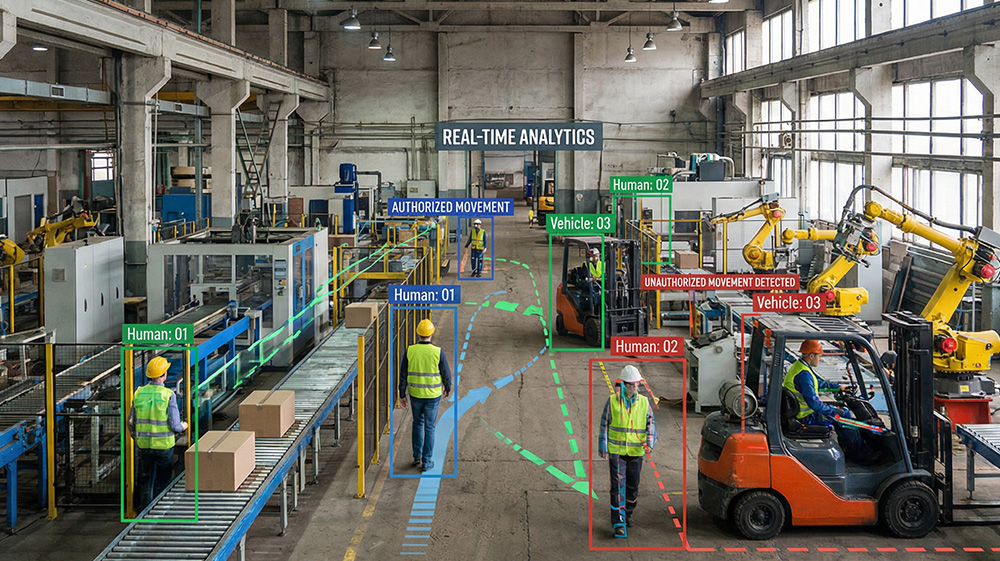
- Factories and industrial environments: Industrial facilities are often at risk of accidents and significant damage. Motion detection algorithms help identify unauthorized access to hazardous areas, detect falls, and recognize abnormal employee movements. In industrial settings, automated motion detection is crucial not only for protecting property but also for safeguarding human lives.
- Stores and commercial centers: In large retail spaces, motion detection algorithms support security while also providing insights for analysis and decision-making. They help identify unusual behavior or theft, manage queues and crowding, and analyze customer movement patterns.
Benefits of Motion Detection in Smart Surveillance
Now that we understand the applications of motion detection algorithms, let’s explore why their use in intelligent video surveillance systems is so important:
- Reduced false alarms: One of the main advantages is a reduction in false alerts. Unlike older systems, real-time motion detection only triggers alerts for significant events, leading to more precise alerts and less operator fatigue.
- Immediate, real-time response: Smart surveillance systems can respond instantly to suspicious movements, triggering alerts to guards, turning on lights or sirens, and recording targeted footage. This allows incidents to be addressed before they escalate.
- Time and cost savings: AI security cameras reduce the time operators spend reviewing recorded footage, allowing them to focus only on critical events. Targeted recording also reduces storage and bandwidth costs.
- Smart decision-making and better analysis: Motion detection algorithms can analyze data to identify high-traffic areas, unusual behaviors, and security vulnerabilities. This enables more accurate and efficient planning and decision-making for maintaining security and order.
Conclusion
As we’ve seen, motion detection algorithms are the backbone of intelligent video surveillance systems. Without them, modern security surveillance systems would lose much of their effectiveness. These algorithms form the foundation for intrusion detection, real-time motion detection, behavior analysis, and recognition of unusual movements. Integrating motion detection in security into surveillance systems allows users to react faster and more reliably, reduce costs, and gather valuable data for analysis and planning to maintain security and order.