
You have probably seen metal and wire fences used to protect borders, military installations, factories, or farms. Although these fences are functional, their installation is often costly and time-consuming, and they are vulnerable to intrusion or sabotage.
With the advancement of modern technologies, systems have been designed that create a digital and invisible border without the need for wires or walls. This system is called a “virtual fence.” A virtual fence uses cameras, sensors, GPS, and smart software to monitor a specific area and automatically alerts when any person or object crosses it. A virtual fence is a smart border that cannot be seen but is always monitoring.
What is a Virtual Fence?
A virtual fence is an invisible, digital border that uses technology to define an area for protection or control without the need for wiring, walls, or physical fencing. In this system, sensors, cameras, radars, or GPS replace traditional fences. For example, in security environments such as airports or military centers, if someone enters a restricted area, the system detects them using smart cameras or motion sensors and sends the necessary alert.
How Does a Virtual Fence Work?
A virtual fence typically works as follows: Instead of installing wires or building walls, you simply draw a boundary on a map on your computer or mobile phone (for example, around a piece of land or building) to define your desired border. The system then monitors that boundary using sensors, cameras, or GPS receivers installed in the environment (or on animals). Whenever a person or object crosses this invisible border, the system immediately detects it and sends necessary alerts. These alerts can take one of the following forms:
- Sending alert messages to mobile phones or email
- Sounding an alarm or turning on lights
- Commanding cameras to zoom in on the point of interest and record images
For example, in livestock farming, a smart collar is attached to the neck of a cow or sheep. If the animal approaches the defined boundary, the collar first warns with a beep sound, and if movement continues, it applies a very mild electric pulse (like an electric fence wire) to make the animal turn back. In this way, the animal gradually learns to stay within the allowed area. As a result, virtual fences use audio, visual, and electrical signals to control borders without building any walls.
What are the Applications of Virtual Fences?
Virtual fences have very wide applications and can be used in various fields:
Livestock and Agriculture: Farmers can define grazing boundaries for their livestock using their mobile phones. If an animal crosses the set boundary, the smart collar encourages it to return by sending an audio warning or a mild pulse. There is no longer a need for extensive wiring and constant maintenance of physical fences.
Security of Premises and Buildings: In sensitive centers such as airports, refineries, power plants, and even office buildings, virtual fences act like an invisible guard and immediately alert and send images to the control room if there is unauthorized entry into restricted areas.
Borders and Sensitive Areas: Governments can use this technology to monitor their borders. In this case, the system detects and reports illegal border crossings using sensors and radars.
Protected Areas and Environment: Virtual fences can be used to preserve wildlife; for example, to restrict wild animals to a specific area or prevent them from entering roads and agricultural lands.
Industrial Applications: In factories and industrial areas, virtual fences can be used to create a safe zone around dangerous machinery or restricted areas to prevent accidental entry.
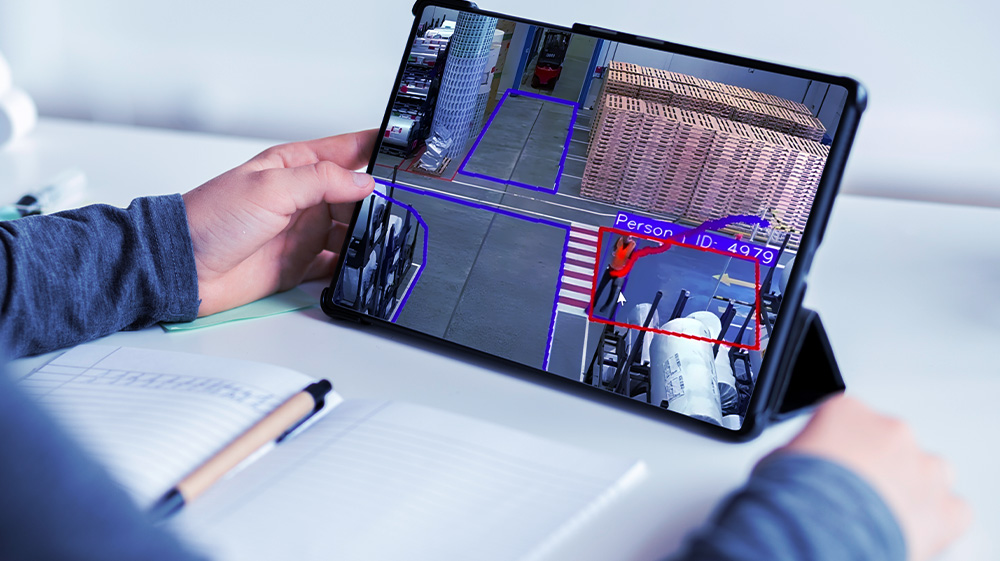
In general, a virtual fence is a smart, multi-purpose border that can be used anywhere there is a need for access control and monitoring.
What are the Advantages of Virtual Fences?
Compared to traditional fences, virtual fences have significant advantages, some of which are mentioned below:
- Cost Reduction and Easier Maintenance: There is no longer a need for extensive wiring, post installation, and constant repairs. Virtual fences are mainly based on software and electronic equipment and therefore have lower installation and maintenance costs.
- High Flexibility: You can easily change, move, or temporarily deactivate borders with just a few clicks on your mobile phone or computer. For example, a farmer can change the grazing area for their livestock by modifying the map in the software without any physical relocation.
- Fast Alert and Response: The system immediately alerts upon detecting any movement or border crossing. As a result, no event remains hidden from the system.
- Ability to Work in Different Conditions: Virtual fences, typically using durable sensors and cameras, can continue to function in various weather conditions (rain, snow, fog).
- Greater Security and Less Error: The use of artificial intelligence and advanced algorithms has enabled the system to distinguish between normal events (such as a cat passing by) and real threats (such as an intruder) and prevent false alarms.
- Environmental Compatibility: Since no physical walls or wires are installed in nature, no damage is done to natural animal pathways and the environment.
- Remote Monitoring: You can monitor your supervised area live from anywhere in the world through an app or software and be informed of traffic details and events.
Challenges of Implementing Virtual Fences
Despite its many applications and advantages, virtual fences, like any other technology, face challenges and limitations:
- High Initial Cost: Although the maintenance cost of virtual fences is low, purchasing initial equipment such as sensors, quality cameras, specialized software, and smart collars may require a significant initial investment.
- Infrastructure Dependency: Most virtual fence systems depend on electricity, internet (Wi-Fi), or mobile networks to function. In remote areas where access to these infrastructures is weak, system performance may be disrupted.
- Technical Problems and Delays: Sometimes there may be a slight delay between an event occurring and the system sending an alert, especially if the network is overloaded or there are too many connected devices.
- Need for Training and Precise Configuration: The system must be properly configured and trained to correctly distinguish between different types of events and prevent false alerts.
- Limited Coverage in Some Areas: In mountainous, steep, or areas with many physical obstacles, GPS or radio signals may not propagate well, requiring the installation of more repeater stations.
Conclusion
Ultimately, it can be said that virtual fences are more than a technological innovation; they are a practical and smart solution for everyday issues. From farmers who want to release their livestock in open pastures without worry, to security managers who need 24/7 monitoring of sensitive facilities, everyone can benefit from this technology. Given its numerous advantages in cost reduction, increased security, and environmental preservation, investing in virtual fences is not only a smart choice but also a step toward a more sustainable and secure future.