
Imagine a chain store where a new layout has been implemented for the summer season shelves. A newly designed display window, beverage locations have been rearranged, and discount signs have been installed at various points. But there’s a fundamental question: Have these changes been effective?
Have more customers stopped by? Which shelves have received more attention? Which products’ inventory ran out faster? And has the way customers move through the store changed?
The answers to these vital questions cannot be found solely through intuitive sense or weekly sales reports. This is where video analytics enters the field. A technology that, by relying on visual data, not only identifies these behaviors but also gives you the ability to react quickly, make data-driven decisions, and optimize immediately.
What is Video Analytics?
Video analytics is a process in which images recorded by CCTV cameras are analyzed using artificial intelligence algorithms and machine learning. This technology can analyze people’s behavior, movements, stops, crowds, and even interaction with products, and present results as reports or real-time alerts.
Why is Video Analytics Important?
Increasing Store Security: By identifying suspicious behaviors such as prolonged loitering, entering prohibited areas, or theft attempts, alerts can be issued immediately, and crimes can be prevented.
Real-time Environmental Awareness: Video analytics can detect which areas have crowds, when queues become long, or which points are less visited.
Reducing Human Risk and Management Error: Intuitive decisions or those based on periodic visits may not be accurate. Real-time visual data provides precise and undeniable information.
How Does Video Analytics Create Value in Retail?
Understanding Customer Behavior: Analyzing customer movement paths, time spent in front of products, high-traffic points, and frequently used routes helps identify sales opportunities and improve layout arrangements.
Smart Queue Management: The system identifies when the number of people in queues increases during necessary times and can automatically send alerts or activate support staff.
Enhanced Monitoring and Security: Entry into prohibited areas, unusual behavior, or even concealing products can be identified, and immediate alerts are issued.
High-Precision Inventory Management: Analysis of shelf images can identify early depletion of products or incorrect arrangements so that ordering and shelf restocking can be done on time.
Evaluating Layout and Advertisement Effectiveness: By comparing two different types of layouts (A/B testing), you can examine which performed better and use it in the future.
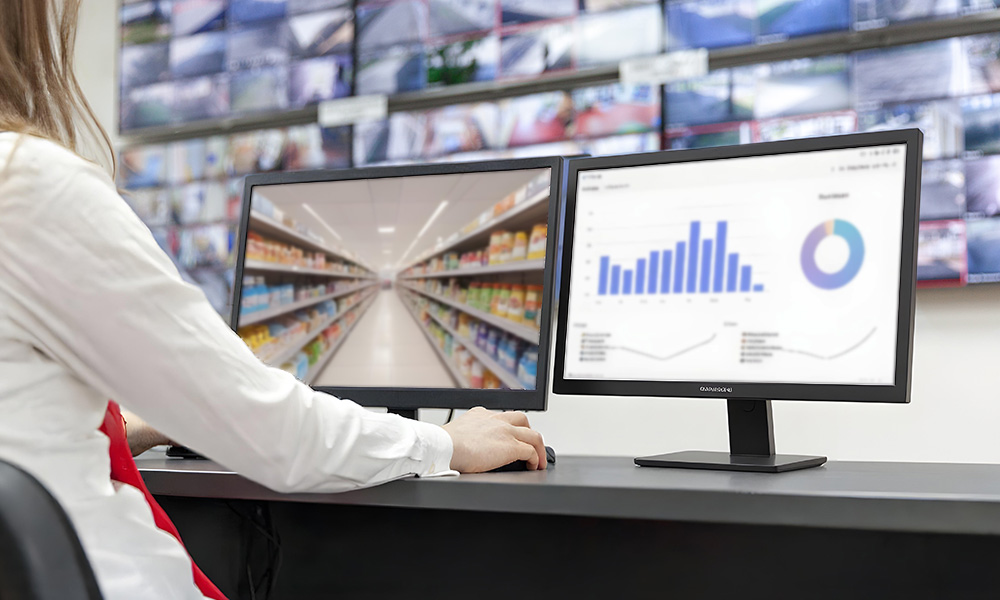
How Does Video Analytics Work?
Store cameras collect visual data: This data can include people’s movements, duration of stops, density, interaction with products, and unusual behaviors.
Analytical algorithms examine the data: Using artificial intelligence, customer behavior is analyzed and patterns are identified, such as high-traffic routes or long stops.
Results are sent as dashboards or alerts: Managers can see alerts instantly, review reports, or issue orders for quick action.
Key Advantages of Video Analytics: Proactive Security Instead of Post-Incident Response. Not just recording and later reviewing, but prediction and prevention of incidents before they occur.
Reducing Operational Costs and Human Resources: By automating monitoring and layout processes, the need for manual inspection and human resource costs is reduced.
Increasing Team Productivity: With accurate information about the environment’s condition, employees can plan better and focus on value-adding tasks.
Optimal Use of Store Space: Through precise analysis of underutilized points and layout optimization, every square meter of the store can achieve maximum return.
Increasing Sales Through Behavioral Data: Customer behavior analysis helps products be placed in the best locations and increases interaction with them.
How to Properly Implement Video Analytics?
Define Objectives Precisely: Do you want to increase sales? Strengthen security? Improve customer experience? The answer to this question determines the project’s direction.
Choose Appropriate Technology: Among available options, a platform should be selected that aligns with your store type, customer volume, and needs.
Implement a Pilot Project: In one store or part of it, implement and evaluate the project. Results can serve as a foundation for expansion.
Train Implementation Team and Store Staff: Employees must be able to use the tool, interpret data, and have appropriate responses.
Continuous Monitoring and Periodic Optimization: Obtained data should be analyzed and, in the form of new insights, help with continuous store improvement.
Video analytics leverages AI to transform visual data into actionable insights for the retail industry. It enables stores to improve security, understand customer behavior, manage queues, and optimize layouts with precision. By implementing it strategically, retailers can enhance customer experience, increase sales, and reduce operational costs.