
As environmental challenges continue to grow in scale and complexity, traditional monitoring approaches are no longer capable of delivering timely and actionable insights. Rapid climate change, rising pollution levels, and ecosystem degradation call for intelligent, data-driven tools that can detect subtle patterns and anticipate future risks. In this context, artificial intelligence has emerged as a transformative force in environmental monitoring, enabling organizations to move beyond purely reactive responses toward proactive and forward-looking strategies. In the following sections, we explore how advanced analytical systems and video management systems (VMS) are reshaping the way environmental protection and management are carried out.
What are AI models for environmental monitoring?
“AI in environmental monitoring” are smart systems and algorithms that gather, analyze, and decode environmental data, helping us understand our planet like never before. These data can be sourced from a variety of channels, including satellite imagery, ground-based sensors, meteorological stations, drones, and chemical analyses of water and soil. The primary objective of these models is to assess the state of the environment and detect changes, pollution, or potential threats across areas such as air, water, soil, and ecosystems. By identifying patterns and anomalies within extensive datasets, AI enables a more precise and timely understanding of environmental conditions.
These models play a crucial role in transforming traditional environmental monitoring into an intelligent and predictive process. With the support of AI, organizations and responsible institutions can act proactively rather than reacting belatedly to crises. For instance, predictive models can provide early warnings of rising air pollution, declining water quality, or ecosystem degradation, thereby supporting more informed decision-making in resource allocation and the design of protective measures.
In addition, Video Management Systems (VMS) are increasingly integrated into AI in environmental monitoring. This visual layer of monitoring enhances situational awareness and allows for faster, more precise interventions, further strengthening the predictive and preventive capabilities of environmental AI models.
Benefits of Environmental AI
Artificial intelligence for environmental protection plays a pivotal role in enhancing the monitoring and management of natural resources, enabling analysis and rapid response to environmental changes beyond the capabilities of traditional methods. By leveraging This technology, environmental specialists can take timely preventive actions and develop more sustainable and effective solutions. In this section, we explore some of the key benefits:
- Resource Optimization
AI can optimize the consumption of natural resources such as water, energy, and fuel. Environmental surveillance using AI allows organizations to analyze data accurately and anticipate future needs, helping prevent resource wastage, boost efficiency, and support long-term environmental sustainability.
- Real-Time Data Gathering and Analysis
One of the greatest advantages of AI in environmental applications is its ability to process data instantly. In a world where ecological changes, such as natural disasters, can occur abruptly, real-time monitoring of these events is critical. AI-powered systems can track parameters such as air quality or seismic activity and detect changes as they happen. This rapid response can save lives and reduce damage during situations like wildfires, floods, or severe storms. The use of such technologies in wastewater pumping stations, for example, can reduce pollution by up to 50% and cut cleanup-related costs by more than 20%.
- Identification and Control of Pollutants
Algorithms of AI in environmental monitoring make it possible to identify sources of pollution and critical environmental hotspots more quickly and accurately. This capability allows for timely intervention and reduces the negative impact of pollutants on ecosystems and human health.
- Risk Reduction and Better Forecasting
By analyzing historical data, AI enables the prediction of environmental changes. These forecasts help organizations allocate resources efficiently and implement risk mitigation strategies proactively.
- Environmentally Scalable Solutions
With its high scalability, AI is a powerful tool for addressing environmental challenges. By providing early warnings, it allows scientists and environmental practitioners to act before problems escalate. Smart drone systems exemplify this capability, enabling the delivery of essential supplies to hard-to-reach areas during environmental crises. This technology illustrates a scalable solution for environmental emergencies and facilitates rapid assistance to remote regions.
- Enhanced Efficiency of Monitoring Systems
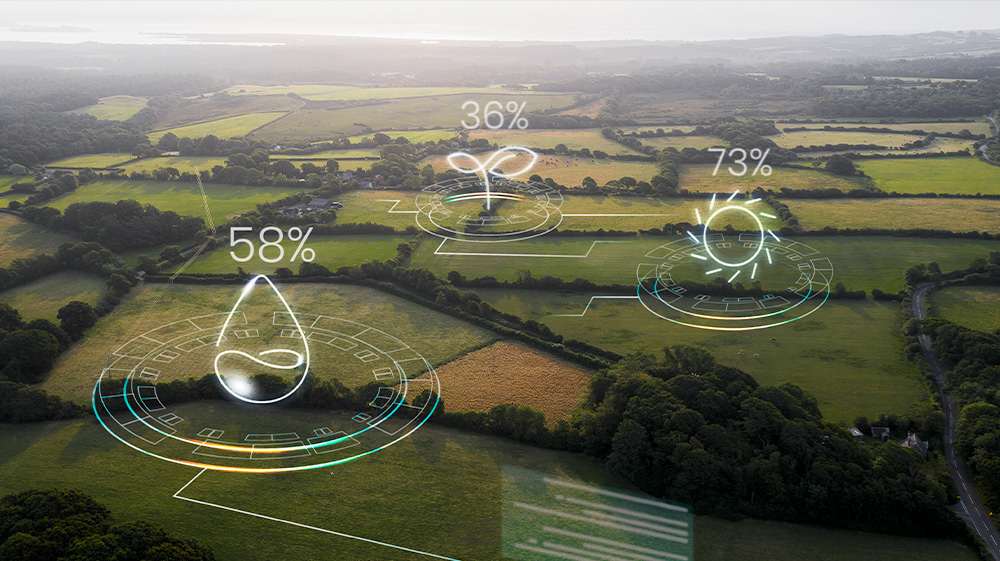
Aging infrastructure can be a source of environmental harm. AI in environmental monitoring, through predictive maintenance tools, monitors the condition of sensors, drones, and other monitoring equipment, alerting operators when repairs or replacements are needed. This ensures that systems remain fully operational and environmental monitoring is conducted continuously and accurately, while AI for wildlife monitoring helps track animal populations and behaviors in real time to support conservation efforts.
How does AI increase efficiency in monitoring systems?
Much of the increased efficiency of modern monitoring systems can be attributed to artificial intelligence. this technology provides precise and transparent analyses of environmental data, helping decision-makers base their actions on evidence and scientific forecasts. This transparency enables the design of more effective policies in natural resource management, pollution reduction, and ecosystem protection.
Moreover, the role of AI in promoting public engagement and education is also significant. Artificial intelligence can present environmental data in visually accessible and understandable formats for the general public. This capability raises awareness of environmental issues, encourages sustainable behaviors, and fosters active participation in environmental conservation.
Overall, environmental AI is not only a powerful tool for monitoring and managing the environment but also enables the prediction of emerging problems, optimization of resources, and advancement of environmental culture. The application of this technology can mark a turning point in the pursuit of sustainable protection of the planet and contribute to improving human quality of life.
Scalable Solutions for Environmental Challenges
Implementing scalable environmental solutions is not a straightforward path, even with advanced technologies such as artificial intelligence, and it comes with challenges that can hinder success. A thorough understanding of these obstacles is crucial for designing scalable approaches.
- Limited Capital in Early Development Stages
One of the key challenges is the substantial investment of capital and resources required in the early stages of deploying AI in environmental monitoring.. While the ultimate goal is to increase resource efficiency on a large scale, the early phase may require substantial investment in infrastructure and technology. For instance, transitioning a national power grid to renewable energy sources necessitates considerable investment in equipment and technology.
- Diverse Environmental and Social Conditions
Local and regional conditions vary widely. A solution that succeeds in one area may not be effective in another. Therefore, developing flexible and adaptable frameworks is essential. For example, agricultural practices that work well in temperate regions may not be fully applicable in arid areas.
- Legal and Regulatory Challenges
Supportive policies and regulations often play a critical role in accelerating and expanding environmental solutions. Policymaking can facilitate widespread adoption by creating market incentives, removing barriers, and setting standards. Tools such as carbon pricing or renewable energy mandates are examples of such policies.
- Consideration of Unintended Consequences
Without attention to required resources, local adaptation, and a supportive legal environment, efforts to scale solutions may be inefficient or even produce negative outcomes. For example, sustainable agriculture on a small scale, such as organic farming and crop rotation, can be effective, but expanding it to meet global demand requires careful management of land, labor, and performance differences compared to conventional farming. Scalable solutions in this domain typically combine innovative technologies, ecological farming principles, and optimized supply chains, rather than merely replicating small farms.

At the end, How AI Can Help the Environment
AI in environmental monitoring supports environmental protection by enabling smarter, data-driven actions and services, such as video management systems (VMS), across prevention, mitigation, and restoration efforts. Through continuous monitoring and advanced analytics, AI helps identify environmental risks before they escalate into large-scale crises. From optimizing renewable energy production and reducing emissions to improving waste management and biodiversity conservation, AI empowers organizations to act with greater precision and foresight. By turning vast amounts of complex environmental data into actionable insights, AI bridges the gap between scientific knowledge and practical implementation.
Furthermore, AI fosters long-term sustainability by supporting collaboration between governments, industries, researchers, and communities. Open data platforms, AI-powered dashboards, and predictive models make environmental information more accessible and understandable, strengthening transparency and accountability. As these technologies continue to evolve, AI has the potential to become a central pillar of global environmental strategies—helping societies balance economic development with ecological responsibility and guiding the transition toward a more resilient and sustainable future.