
Artificial intelligence has transformed the way businesses analyze customer behavior, public spaces, and digital interactions. Among the most important innovations in modern computer vision is Age and Gender Detection, a technology capable of estimating a person’s demographic attributes from facial images or video streams without identifying who they are.
From smart retail stores and digital advertising systems to transportation analytics and hospitality services, AI-based facial analysis is rapidly becoming a core part of data-driven decision-making.
In this guide, we will explore how Age and Gender Detection works, the algorithms behind it, its real-world applications, benefits, limitations, and the future of this rapidly evolving field.
What Is Age and Gender Detection?
Age and Gender Detection is a branch of face analysis and computer vision that analyzes facial features to estimate an approximate age or age range, gender attributes, and other demographic insights.
Instead of recognizing a specific individual by name, the system focuses on facial attribute detection. This distinction is important because it allows organizations to gather valuable demographic analytics while reducing privacy concerns associated with traditional facial recognition technologies.
Modern AI Age Detection systems typically classify users into age groups such as:
- 0–12
- 13–19
- 20–34
- 35–54
- 55+
At the same time, Gender Recognition models estimate gender categories using deep learning classifiers trained on large facial datasets. These systems are designed to recognize visual patterns associated with different gender characteristics by analyzing facial structure, skin texture, jawline shape, and other biometric features.
Thanks to advances in deep learning gender detection and AI-based face analytics, modern models can perform these predictions in real time with high accuracy, even in dynamic environments such as retail stores, transportation hubs, shopping malls, and public events.
How Does Age and Gender Detection Work?
At its core, Age and Gender Detection relies on multiple layers of computer vision pipelines and deep learning models working together. Instead of performing a single computation, the system processes facial data step by step; starting from raw image input and gradually transforming it into meaningful demographic insights such as age range and gender classification.
These systems are typically designed as modular pipelines, where each stage improves the quality of input for the next one, ultimately producing reliable outputs for AI-based face analytics.
1. Face Detection
The first and most fundamental step is detecting human faces within an image or video frame. This stage is responsible for identifying where faces are located and separating them from the background environment.
Face detection is crucial because all subsequent processes depend on correctly identifying facial regions. If this step fails, the entire Computer Vision Age Detection pipeline becomes inaccurate.
Popular face detection techniques include:
- Haar Cascades
- HOG (Histogram of Oriented Gradients)
- SSD (Single Shot Detector)
- MTCNN (Multi-task Cascaded Convolutional Networks)
- YOLO-based detectors
Each method has its own trade-offs between speed and accuracy. For example, YOLO-based models are widely used in real-time systems due to their high performance, while MTCNN is often preferred for more precise facial localization.
In modern AI Face Analysis systems, deep learning-based detectors are preferred because they perform well under different lighting conditions, angles, and real-world environments.
2. Face Alignment
After detecting a face, the system performs face alignment to normalize its position and orientation. This step ensures that all faces are processed in a consistent format before feature extraction begins.
Face alignment works by identifying key facial landmarks such as eyes, nose, mouth and jawline. Once these landmarks are detected, the face is rotated, scaled, and centered so that the eyes and other features are aligned in a standard position.
This step is extremely important because even small variations in face orientation can reduce the accuracy of Deep Learning for Face Analysis models. By standardizing facial geometry, the system ensures that the model focuses on meaningful features rather than variations caused by camera angle or perspective.
3. Feature Extraction
Feature extraction is the stage where the AI begins to understand the characteristics of the face. Instead of working with raw pixels, the system identifies high-level patterns that correlate with age and gender.
These features typically include:
- Skin texture and smoothness
- Facial structure and bone shape
- Wrinkle patterns and fine lines
- Proportions of facial components
- Beard or facial hair presence
- Symmetry and spatial relationships
This process is powered by Convolutional Neural Networks (CNNs), which are designed to automatically learn hierarchical patterns from images. Early layers of the network capture simple edges and textures, while deeper layers learn more abstract facial representations.
In modern Facial Attribute Detection systems, feature extraction is often the most computationally intensive stage, as it determines the quality of all downstream predictions.
4. Age Estimation
Once features are extracted, the system moves to age estimation, where it predicts the likely age of a person based on learned facial patterns.
Age estimation can be performed in several ways:
- Exact age prediction
- Age probability distribution
- Age group classification
Most real-world systems prefer age group classification. This is because exact age prediction is highly sensitive to small visual differences and can be affected by lighting, expression, and ethnicity. By contrast, age ranges provide more stable and practical outputs for AI Age Detection applications, especially in retail analytics and customer segmentation.
5. Gender Classification
In parallel with age estimation, the system performs gender classification using a separate or multi-task deep learning model. This stage is responsible for identifying gender-related attributes based on facial features learned during training on large-scale datasets.
Modern deep learning gender detection systems analyze patterns such as:
- Jawline structure
- Facial proportions
- Skin texture differences
- Hair and facial hair cues
- Overall facial morphology
The model outputs a probability score for each class (commonly male/female, though some systems support extended classifications depending on design). In advanced AI-based face analytics systems, gender classification is often combined with age estimation in a single multi-output model to improve efficiency and consistency.
6. Aggregation and Analytics
The final stage is aggregation, where individual predictions are transformed into meaningful business intelligence. Instead of storing personal identities, modern systems aggregate data anonymously over time to generate insights such as:
- Visitor age distribution trends
- Gender ratio in specific time intervals
- Peak demographic activity hours
- Customer segmentation patterns
These results are typically visualized in dashboards and reports, enabling organizations to make data-driven decisions without compromising individual privacy.
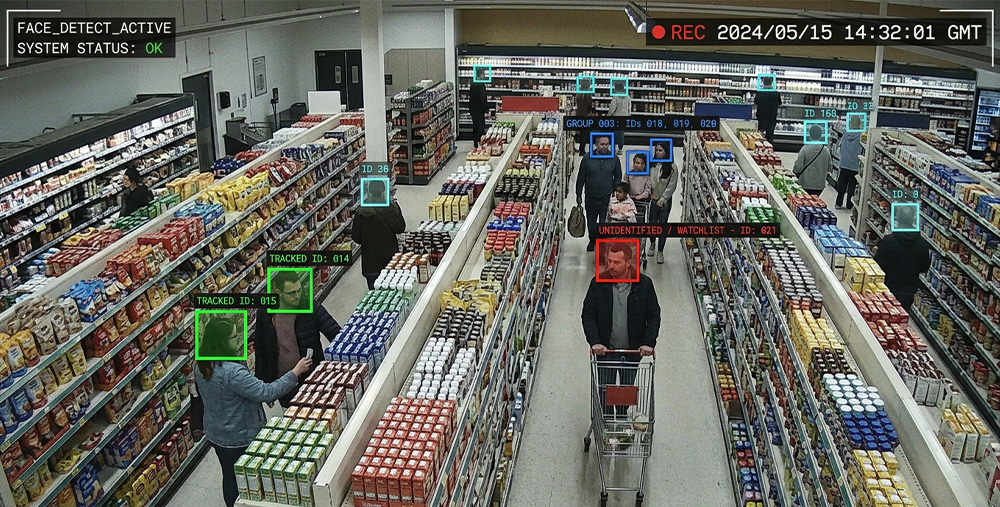
This approach is what makes Computer Vision Age Detection especially valuable in privacy-sensitive environments such as retail stores, transportation systems, and public spaces. By focusing on anonymized statistical insights rather than identity tracking, businesses can benefit from AI face analysis for retail stores while maintaining ethical and regulatory compliance.
Key Algorithms Used in Age and Gender Detection
Modern Human Attribute Recognition systems rely heavily on deep learning architectures. Next, we will examine some of the most widely used algorithms in Age and Gender Detection.
· Convolutional Neural Networks (CNNs)
CNNs are the backbone of most AI Face Recognition and age detection systems. These networks automatically learn facial patterns from massive datasets.
Common CNN architectures include:
- VGGNet
- ResNet
- MobileNet
- EfficientNet
- InceptionNet
· Transfer Learning
Many developers use pre-trained image recognition models and fine-tune them for age and gender tasks. This approach reduces training time and improves performance.
· Multi-Task Learning
Some advanced systems perform multiple facial analysis tasks simultaneously, including face detection, Emotion recognition, Age estimation and Gender recognition. This improves efficiency and reduces computational overhead.
· Regression Models
For exact age prediction, regression algorithms estimate a continuous numeric value rather than a category. However, because exact age estimation is difficult, most production-grade solutions rely on age bins.
· Ensemble Learning
Some systems combine several models together to improve prediction reliability in real-world conditions such as:
- Poor lighting
- Occlusions
- Side profiles
- Motion blur
By leveraging multiple models working together, ensemble learning significantly enhances the robustness of Computer Vision Age Detection and deep learning gender detection systems, making them more suitable for deployment in public environments.
Applications of Age and Gender Detection
AI-based gender detection is widely used across industries to generate anonymous demographic insights through AI-based face analytics.
· Retail Analytics
In retail environments, AI face analysis for retail stores helps businesses understand customer demographics such as age distribution, gender ratios, and peak shopping groups. These insights are used to improve product placement, optimize store layouts, manage staffing, and design more effective marketing campaigns based on real visitor behavior.
· Digital Signage and Advertising
Digital advertising systems use real-time demographic detection to adjust content based on the audience. Younger viewers may see trend-focused ads, while older groups receive different messaging. This improves engagement and makes advertising more targeted and efficient.
· Shopping Mall Intelligence
Malls use AI-based face analytics to analyze foot traffic and visitor composition. This helps in choosing tenants, improving customer experience, and identifying peak demographic groups for better planning and promotions.
· Transportation and Smart Cities
City planners leverage Computer Vision Age Detection to analyze how different demographic groups use public transportation systems. By understanding the age distribution of passengers, they can make more informed decisions about optimizing routes, enhancing accessibility features for specific groups such as elderly or young users, and developing infrastructure that better matches the actual needs of the population.
· Hospitality Industry
Hotels and resorts are increasingly using AI-driven demographic insights to understand who their guests are, without ever needing to collect or store personal identity data. This allows them to tailor guest experiences more intelligently, refine their marketing strategies, and design facilities that better meet customer needs.
· Event Analytics
Event organizers rely on AI Age Detection to understand who their audience is and how engaged they are during an event, all without needing surveys or sign-up forms. These real-time insights help them fine-tune future events and create more targeted, effective marketing campaigns.
Advantages and Challenges of Age and Gender Detection
Like any AI technology, Age and Gender Detection offers major benefits alongside important limitations.
Advantages of Age and Gender Detection
Like any AI technology, Age and Gender Detection offers significant advantages that make it valuable for modern industries, especially those relying on AI-based face analytics and real-time decision-making systems.
· Privacy-Friendlier Than Facial Recognition
One of the most important advantages is that this technology does not identify individuals or store personal identities. Instead, it only estimates general demographic attributes such as age range and gender. Because of this, it is generally considered less invasive than traditional biometric systems like facial recognition, making it more suitable for environments where privacy is a key concern.
· Real-Time Analytics
Another major benefit is the ability to generate insights in real time. Organizations can analyze live video feeds and immediately receive demographic information about the people present in a specific area. This allows businesses to react quickly, for example, adjusting digital advertisements, staffing levels, or customer engagement strategies based on current audience composition.
· Operational Efficiency
Age and Gender Detection helps organizations make faster and more informed operational decisions. By understanding customer demographics, businesses can optimize various processes such as resource allocation, staff scheduling, marketing campaigns, and product positioning. This leads to more efficient operations and better alignment between business strategy and actual customer behavior.
· Scalable Data Collection
Unlike manual observation or surveys, AI systems can process large volumes of data automatically. They are capable of analyzing thousands of faces simultaneously across multiple camera feeds without human intervention. This scalability makes the technology especially useful in high-traffic environments such as malls, airports, and retail chains.
· Improved Customer Experience
By understanding the demographic composition of their audience, organizations can tailor experiences more effectively. This may include personalized promotions, optimized store layouts, or more relevant advertising content. As a result, customers receive a more engaging and relevant experience, which can ultimately improve satisfaction and loyalty.
Challenges of Age and Gender Detection
Despite its growing popularity and wide range of applications, Age and Gender Detection also comes with several important challenges that can impact its accuracy, fairness, and real-world usability.
· Challenges of Age and Gender Detection
One of the main challenges is maintaining high accuracy outside of controlled environments. Factors such as poor lighting, low-resolution cameras, motion blur, or extreme facial angles can significantly reduce model performance. In real-world scenarios like crowded malls or busy streets, these conditions are very common, making consistent accuracy more difficult to achieve.
· Bias in Training Data
Another major issue is dataset bias. If the AI models are trained on non-diverse or unbalanced datasets, they may perform better on certain age groups, ethnicities, or genders than others. This can lead to unfair or inconsistent predictions, which is a serious concern in AI-based face analytics systems that are used at scale.
· Difficulty in Exact Age Prediction
While age group classification is relatively reliable, predicting exact age remains highly challenging. Facial appearance can vary significantly due to lifestyle, genetics, lighting, and image quality. As a result, most systems avoid precise age estimation and instead rely on broader age ranges to improve stability.
· Technical Constraints
Deploying Computer Vision Age Detection systems in real-time environments requires strong hardware and optimized models. High computational cost, latency in video processing, and limitations in edge devices can make large-scale deployment more complex and expensive, especially in resource-constrained environments.
Difference Between Face Detection and Age & Gender Detection
Although these technologies are closely related, they serve different purposes. Face detection serves as the foundation for age and gender analysis systems.
Importantly, Age and Gender Detection does not necessarily identify individuals. This distinction helps many organizations use demographic analytics while minimizing privacy concerns.
| Technology | Purpose | Output |
| Face Detection | Finds faces in images or video | Face coordinates |
| Face Recognition | Identifies specific individuals | Identity match |
| Age Detection | Estimates age range | Age prediction |
| Gender Detection | Predicts gender attributes | Gender classification |
Best Tools and Frameworks for Age and Gender Detection
Developers have access to a wide range of powerful tools and frameworks for building Facial Attribute Detection systems. These tools support everything from model training to real-time deployment in production environments.
Sphere
Sphere is a video surveillance AI plugin designed to integrate with professional CCTV management platforms such as Milestone. It extends traditional video monitoring systems by adding intelligent analytics capabilities powered by computer vision and deep learning.
Unlike standalone frameworks, Sphere operates as an extension layer on top of existing surveillance infrastructures, enabling organizations to upgrade their security systems without replacing their current setup.
Key capabilities include:
- Real-time AI-based video analytics on live camera feeds
- Integration with professional VMS platforms like Milestone
- Advanced facial analysis including age and gender detection
- Behavioral and pattern recognition in monitored environments
- Scalable deployment across multiple camera networks
By combining traditional surveillance with AI-based face analytics, Sphere enables organizations to transform standard security systems into intelligent monitoring platforms capable of delivering both security insights and demographic intelligence in real time.
OpenCV
OpenCV is one of the most widely used computer vision libraries for face detection and image preprocessing. It provides essential building blocks for developing AI vision systems.
Features include:
- Face detection
- Image processing
- Real-time video analysis
- Integration with deep learning models
TensorFlow
TensorFlow is a leading deep learning framework commonly used for training and deploying Age and Gender Detection models at scale.
Advantages include:
- High scalability for large AI systems
- GPU acceleration for faster processing
- Extensive ecosystem of tools and libraries
- Strong support for production deployment
PyTorch
PyTorch is highly popular in both research and production environments for building flexible AI models.
It offers:
- Dynamic and flexible neural network design
- Fast experimentation and prototyping
- Strong community and research support
DeepFace
DeepFace is a high-level library that provides ready-to-use facial analysis capabilities.
It includes:
- Age estimation
- Gender recognition
- Emotion analysis
- Face verification
MediaPipe
MediaPipe is a lightweight framework optimized for real-time and mobile applications. It is especially useful for fast face tracking and landmark detection.
Features include:
- Efficient real-time performance
- Cross-platform support
- Optimized facial landmark detection
YOLO
YOLO (You Only Look Once) is widely used for fast and accurate object and face detection in real-time video streams.
Features include:
- Extremely high-speed detection
- Suitable for real-time surveillance systems
- Strong performance in dynamic environments
Future of Age and Gender Detection Technology
The future of Age and Gender Detection is closely tied to the rapid evolution of deep learning, edge computing, and multimodal AI systems. As models become more advanced, they will move beyond simple age range and gender classification toward richer and more contextual human understanding. Instead of only estimating demographic attributes, future systems will likely combine facial analysis with behavioral signals, emotional cues, and environmental context to generate more accurate and meaningful insights. At the same time, improvements in neural network efficiency will allow these models to run faster and more reliably in real-world conditions such as crowded public spaces, low-light environments, and high-motion video streams.
Another major direction for this technology is the shift toward privacy-preserving AI. Future systems will increasingly rely on on-device processing and edge AI, meaning that sensitive visual data will be analyzed locally without being transmitted to central servers. As regulations around data protection become stricter globally, the development of transparent, ethical, and bias-reduced AI systems will play a central role in shaping the next generation of AI-based face analytics technologies.
Conclusion
Age and Gender Detection represents a significant advancement in AI-based facial analysis, enabling organizations to extract valuable demographic insights without identifying individuals. By combining computer vision techniques with deep learning models, these systems can accurately estimate age ranges and gender attributes in real time, even in complex and dynamic environments.
As AI continues to evolve, the future of Age and Gender Detection will likely focus on improving accuracy, reducing computational costs, and enhancing privacy through edge computing and ethical AI design. Ultimately, its evolution will shape more intelligent, privacy-conscious, and context-aware systems that better understand human presence while respecting individual identity boundaries.