
Next time you hit the airport, don’t be surprised if you skip the line and walk right to your gate without ever pulling out your ID.
In today’s world, thanks to the power of Artificial Intelligence (AI), the old, manual ways of doing things are quickly vanishing. One of the best examples? Facial Recognition.
Think about it: The moment you step into the terminal, your face gets scanned, your identity is instantly verified, and you breeze through security faster than ever. It’s not just faster; it also makes things much safer. And that airport experience is just the tip of the iceberg.
In this article, we’re going to dive into what facial recognition really is, explore how AI made it so powerful, and weigh the incredible upsides against the real-world concerns we all need to talk about.
What is Facial Recognition?
For humans, recognizing a friend or family member is totally natural, but for a computer, though, it’s surprisingly complex.
Facial recognition is basically a technology that gives machines the human ability to identify people just by looking at their faces. But instead of relying on memory, the computers use AI and computer vision to get the job done.
The Faceprint: Your Digital ID
At its core, the technology works by turning your unique face into cold, hard data. The system measures distinct features, like the exact distance between your eyes, the shape of your nose, or the curve of your jawline, and then converts all of that into a unique digital signature called a “faceprint.”
The software then takes that faceprint and checks it against a massive database of stored faceprints. If there’s a match, you’re accurately identified. This makes the tech powerful enough to ID you in a still photo or even a real-time video stream.
How Does Facial Recognition Actually Work?
Facial recognition might appear effortless, but it’s actually a detailed process fueled by AI and computer vision. Video Management Systems (VMS) use five key steps for facial recognition, which we’ll explore in detail:
1. Image Capture
The process begins when a camera captures a photo or video of your face. This can happen on a smartphone, security camera, or any other device with imaging capabilities.
2. Face Detection
The system first has to figure out, “Where is the face in this image?” It isolates your face from the cluttered background, making sure it only focuses on the crucial area.
3. Feature Extraction
This is where the real work happens. The system measures key “landmarks” on your face: the distance between your pupils, the angle of your cheekbones, and other unique features.
4. Conversion to Data
All those measurements are mathematically transformed into your unique digital blueprint, the faceprint.
5. Matching
Finally, the faceprint is compared against a database of stored faceprints. If there’s a match, you’re identified.
This stepwise process, while precise, relies heavily on advanced AI algorithms to handle variations in lighting, angles, facial expressions, and even accessories like glasses or masks.
Applications of Facial Recognition
Facial recognition has become increasingly common, with applications spanning multiple industries and everyday life.
- Security
One of the most prominent uses is in security. Airports, border control, and law enforcement agencies use facial recognition to identify travelers, prevent fraud, and enhance public safety. Surveillance systems also leverage this technology to monitor crowded spaces and detect potential threats. - Consumer Technology
Facial recognition is widely integrated into consumer devices. Smartphones, smart locks, and various apps use it for authentication, allowing users to unlock devices, authorize payments, or access personal accounts quickly and securely. - Retail and Marketing
Businesses use facial recognition to better understand customer behavior. By analyzing facial expressions and demographics, retailers can offer personalized advertisements, improve in-store experiences, and optimize customer engagement strategies. - Healthcare
In healthcare, facial recognition helps with patient identification, ensuring that medical records match the correct individual. It can also assist in monitoring patients, detecting emotions or distress, and even tracking symptoms for certain conditions.
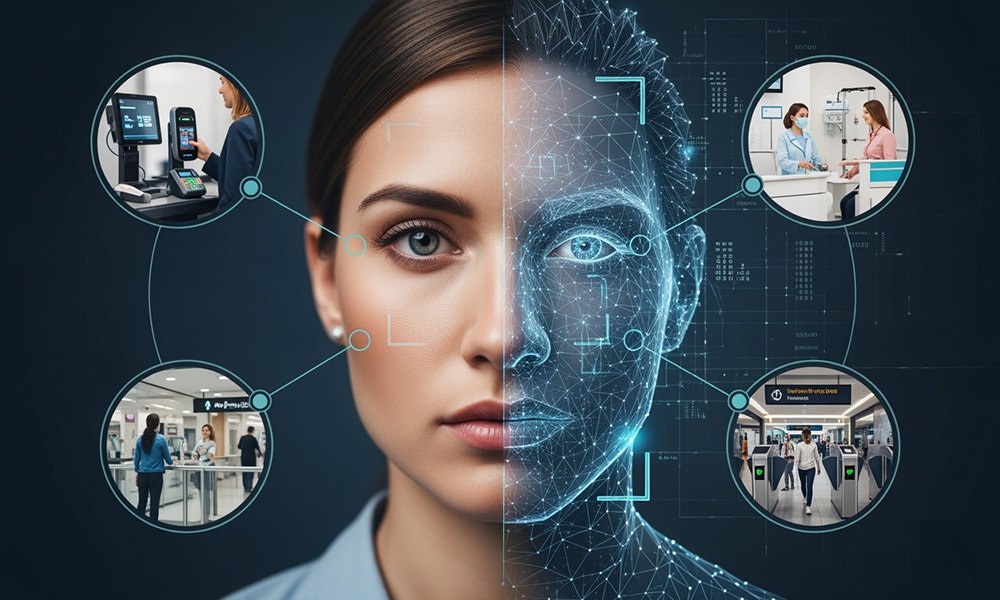
The applications of facial recognition go beyond security, consumer tech, retail, and healthcare; it is also finding uses in areas like education, transportation, and even entertainment, showing its potential to reshape many aspects of our daily lives.
Benefits
Facial recognition offers several advantages that make it increasingly popular across different industries and everyday life.
1. Convenience
One of the biggest benefits is convenience. Users can unlock devices, access apps, or authorize payments without remembering passwords or PINs, making everyday tasks faster and simpler.
2. Speed and Automation
Facial recognition automates identification processes, reducing the need for manual checks. This allows for faster verification in places like airports, workplaces, and secure facilities, saving time for both users and administrators.
3. Enhanced Security
In many cases, facial recognition improves security. Using unique facial features instead of easily stolen credentials makes unauthorized access more difficult, helping protect personal information, devices, and sensitive locations.
4. Non-Contact Identification
Unlike fingerprint scanners or ID cards, facial recognition doesn’t require physical contact, making it more hygienic and suitable for environments where minimizing touch is important, such as hospitals or public transport.
5. Personalized Experiences
Facial recognition can help create more personalized experiences. In retail or entertainment, it can recognize returning customers and tailor services, offers, or recommendations to individual preferences, enhancing engagement and satisfaction.
These advantages make facial recognition a powerful tool that not only simplifies daily tasks but also opens the door to more secure, efficient, and personalized experiences.
Challenges & Concerns
The tech is amazing, but it’s not perfect. While humans can easily recognize someone even if they grow a beard or change their hairstyle, machines still struggle with these variations, which is why they constantly need better AI.
- Privacy Issues
One of the biggest debates around facial recognition is privacy. When cameras and algorithms can track faces in public spaces, this often happens without people’s knowledge or consent. As a result, concerns around this issue should be taken seriously. - Bias and Accuracy Problems
Despite technological advancements, these systems are not flawless. Research shows that facial recognition is less accurate for certain groups. Such biases can lead to incorrect results or misidentification, which can be dangerous in sensitive areas like law enforcement. - Security Risks
No system is completely secure. Facial recognition can be deceived through methods such as spoofing (using photos, masks, or videos) or even with manipulations based on deepfakes. These threats highlight the need for stronger safeguards and multi-layered authentication.
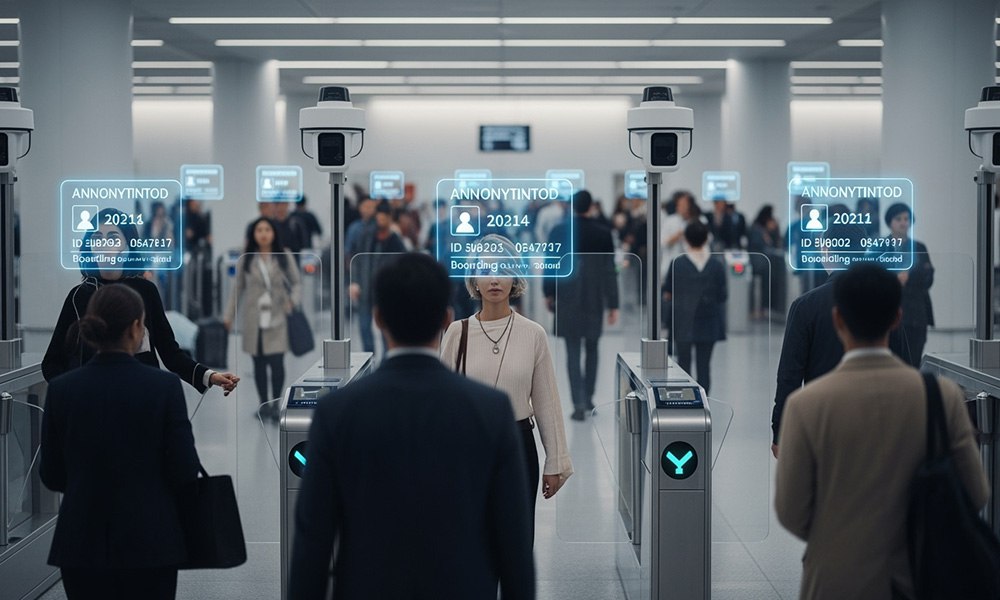
In short, Facial recognition brings powerful capabilities, but its risks to privacy, fairness, and security make careful oversight essential.
The Future Looks Smarter and More Secure
The future of facial recognition promises significant advancements as technology continues to evolve. AI is constantly improving, working to reduce those harmful biases and ensure high accuracy for everyone. We can also expect it to team up with other tech, like voice recognition and fingerprints, to create super-secure, multi-layered security systems that are both convenient and robust.
Conclusion
Facial recognition is no longer a sci-fi futuristic idea; it’s part of the fabric of our daily lives. It makes things faster, beefs up security, and personalizes our experiences in ways we might not even notice. By combining the power of AI, computer vision, and precise data, it’s quickly becoming a vital tool for a safer and smarter world.